
Window Tint Laws in the ACT: What’s Legal, What’s Not & What Could Get You Fined
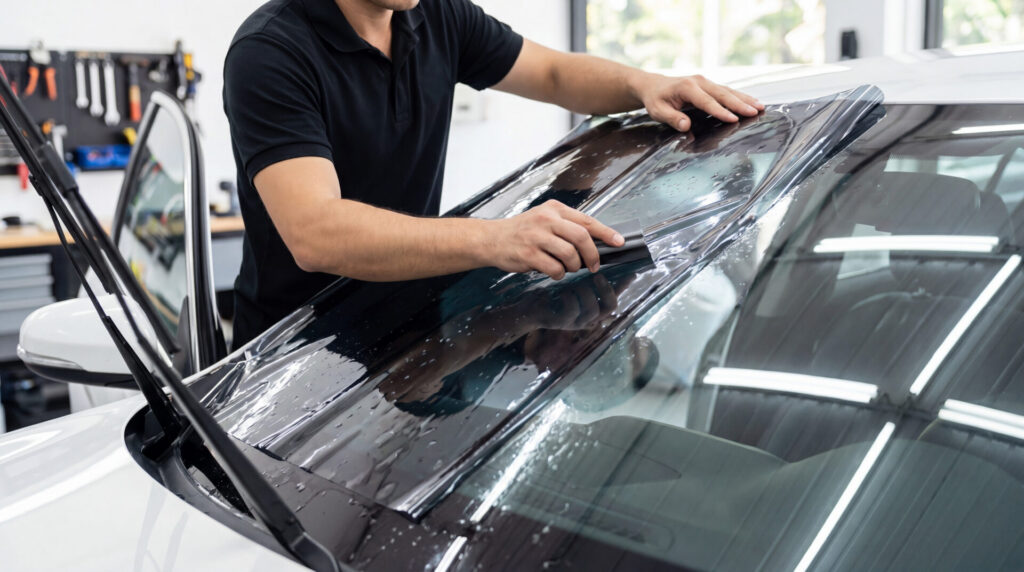
Window tint can improve the appearance of your car, reduce glare, increase privacy and help keep the cabin cooler.
But if your tint is too dark, your vehicle may not comply with ACT vehicle standards.
If you’re considering professional window tinting in Canberra, here’s what you need to know before choosing your tint.
What Does VLT Mean?
VLT stands for Visible Light Transmission and refers to the percentage of visible light that passes through your window. Access Canberra refers to this measurement as light transmittance (LT). Access Canberra – Vehicle windscreen and window tinting
The lower the percentage, the darker the window.
For example:
- 35% VLT allows 35% of visible light through
- 20% VLT allows less light through and therefore appears darker
- 5% VLT is extremely dark
Importantly, the legal percentage applies to the finished window, not simply the tint film on its own.
That means the factory glass and the tint film work together to determine the final light transmission.
For example, applying film labelled 35% VLT to factory glass does not necessarily mean the finished window will measure exactly 35% VLT, because the original automotive glass may already reduce some light transmission.
This is one reason professional installation is important. Your installer needs to consider both the existing glass and the film being applied.
What Is the Legal Tint Limit in the ACT?
According to Access Canberra’s current vehicle window tinting guidance, the minimum light-transmission requirements for passenger vehicles are:
- Driver and front passenger side windows: minimum 35%
- Rear passenger side windows: minimum 20%
- Rear window: minimum 20%
In simple terms, the rear windows can legally be darker than the front side windows.
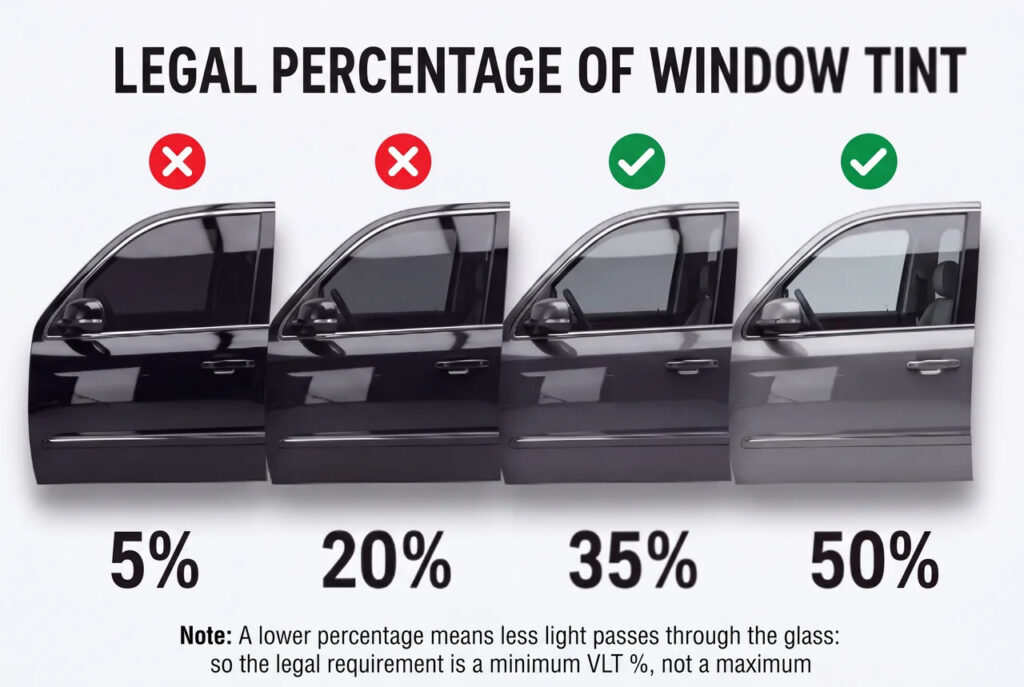
What Do Different Tint Percentages Look Like?
The percentage refers to how much visible light passes through the finished window.
The lower the percentage, the darker the glass.
| Tint Level | What It Looks Like | ACT Front Side Window Guide |
|---|---|---|
| 5% VLT | Very dark | ✕ Below the minimum legal light transmission for front side windows |
| 20% VLT | Dark | ✕ Below the minimum legal light transmission for front side windows |
| 35% VLT | Medium tint | ✓ Minimum legal light transmission for front side windows |
| 50% VLT | Light tint | ✓ Above the minimum legal light transmission requirement |
Important: A lower percentage means less light passes through the glass. The ACT requirement is a minimum light-transmission percentage, not a maximum.
These limits are consistent with current Access Canberra guidance, which specifies at least 35% light transmittance for the driver and front-passenger side windows and at least 20% for rear passenger side windows and the rear window.
What Do Different Tint Percentages Mean?
It can seem backwards at first:
Lower percentage = darker glass.
A window measuring 20% VLT lets less light through than a window measuring 35% VLT.
So when ACT rules specify a minimum VLT or light-transmission percentage, the finished glass must allow at least that amount of visible light through.
Can You Tint the Front Windscreen?
Tint that reduces light transmission cannot be applied across the normal viewing area of the front windscreen.
According to Access Canberra, a tint strip may be fitted across the top of the windscreen where it is within either:
- The area above the highest point swept by the windscreen wipers, or
- The upper 10% of the windscreen
There is no minimum light-transmission requirement for a tint strip positioned within that permitted area.
Tint that reduces light transmission cannot be applied to the remainder of the windscreen.
Can Illegal Window Tint Get You Fined?
Yes.
If your vehicle’s windows or glazing do not comply with the applicable ACT vehicle standards, you may face enforcement action.
As of September 2026, the current Road Transport (Offences) Regulation 2005 lists a $279 infringement penalty for a driver or operator of a motor vehicle that does not comply with the applicable windscreen, window, interior partition or glazing standards. ACT Road Transport (Offences) Regulation 2005
This is why simply choosing the darkest tint available isn’t always the best option.
Your finished glass-and-film combination needs to remain within the applicable ACT requirements.
Penalties and vehicle standards can change, so motorists should refer to current ACT Government guidance.
Does Darker Tint Mean Better Heat Protection?
Not necessarily.
Modern high-quality window films can provide strong heat and UV protection without needing to be extremely dark.
When choosing tint, it’s worth considering:
- Heat rejection
- UV protection
- Glare reduction
- Film quality
- Optical clarity
- Privacy
- Legal light-transmission requirements
A quality film can provide excellent protection and comfort while still remaining within ACT requirements.
Quick ACT Window Tint Guide
| Window | ACT Minimum / Requirement |
| Front windscreen | No tint reducing light transmission across the normal viewing area |
| Top windscreen strip | Above the highest wiper sweep or within the upper 10% |
| Front side windows | Minimum 35% light transmission |
| Rear side windows | Minimum 20% light transmission |
| Rear window | Minimum 20% light transmission |
These requirements reflect current Access Canberra guidance for vehicle windscreen and window tinting. Different requirements or exemptions can apply to certain vehicle types, so motorists should check current ACT Government guidance where applicable.
Why Choose Professional Window Tinting?
Professional installation helps reduce common problems such as:
- Bubbling
- Peeling
- Poor edges
- Creases
- Contamination under the film
- Fading or discolouration
- Excessively reflective film
- Tint that results in the finished window being darker than the legal limit
One of the biggest advantages of using a professional installer is ensuring the finished glass-and-film combination is appropriate.
Because factory automotive glass isn’t perfectly clear, simply choosing a film labelled “35%” doesn’t automatically mean the completed window will measure 35%.
A professional installer can recommend an appropriate film for your particular vehicle while taking the existing glass into account.
Professional Window Tinting in Canberra
At The Dent Brothers, we provide professional automotive window tinting in Canberra from our Fyshwick workshop.
Whether you’re tinting a new vehicle, replacing old or damaged film, or upgrading your vehicle’s comfort, privacy and appearance, our team can help you choose a quality tint suited to your vehicle while keeping ACT requirements in mind.
👉 Ready to tint your vehicle? Book a quote with The Dent Brothers today.